

Most paywalls make one offer to everyone. Same banner, same discount, same plan — whether you've read one free article or twenty, whether you arrived from a championship recap or a roster transaction.
That's leaving money on both sides of the table. You over-discount the reader who was going to subscribe anyway, and you under-serve the one who needed a nudge.
The fix isn't a better banner. It's pricing the moment.
Read the moment, then set the offer
At The Athletic, the paywall didn't ask "what plan should we sell?" It asked "who is this, right now, and what will move them?" The discount was set dynamically from the context of the visit:
- The article they hit the wall on — a marquee story signals different intent than a niche one.
- Their engagement — how many articles, how recently, how deep.
- Where they came from and what they'd done before.
Same paywall, a different offer per reader — tuned to the conversion moment instead of an average.
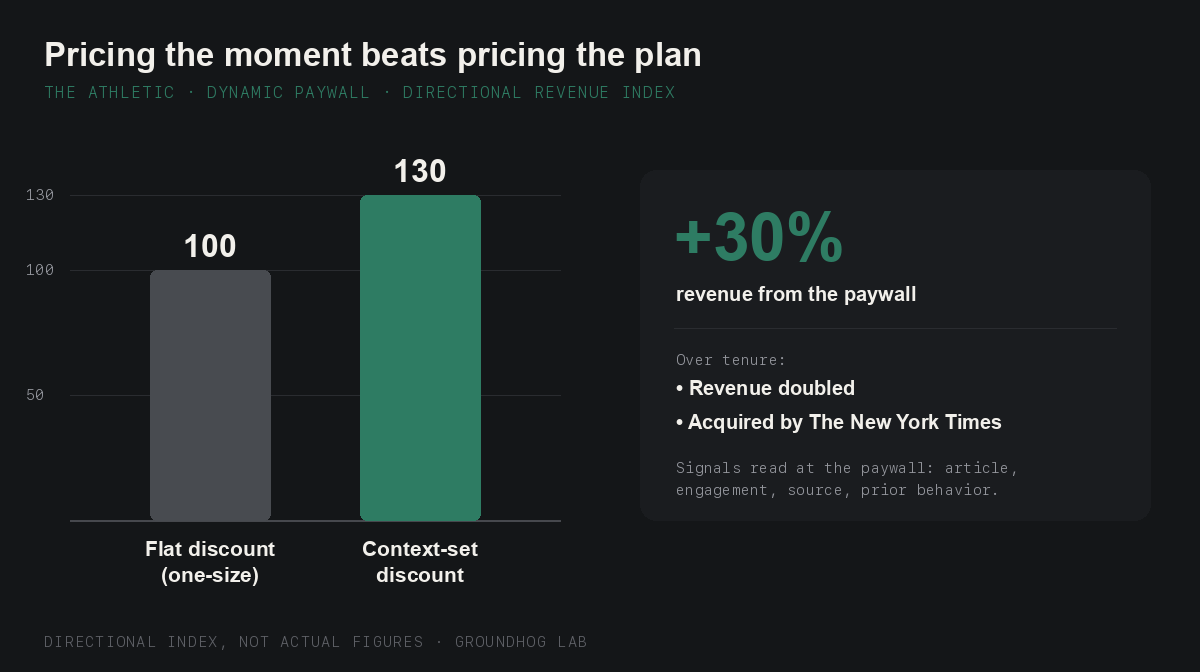
A flat offer optimizes the average reader. Nobody is the average reader.
The lift was real: +30% revenue from the paywall, with revenue doubling over the period, through to the company's acquisition by The New York Times. The same instinct showed up elsewhere in the funnel — matching content to local sports audiences cut paid marketing cost 20% without losing reach.
I'll skip the model and the exact signals we weighted — that's the build, and a good one is specific to your product. But the principle travels: stop pricing the plan. Price the moment. The data to do it is almost always already in your funnel, sitting unused.